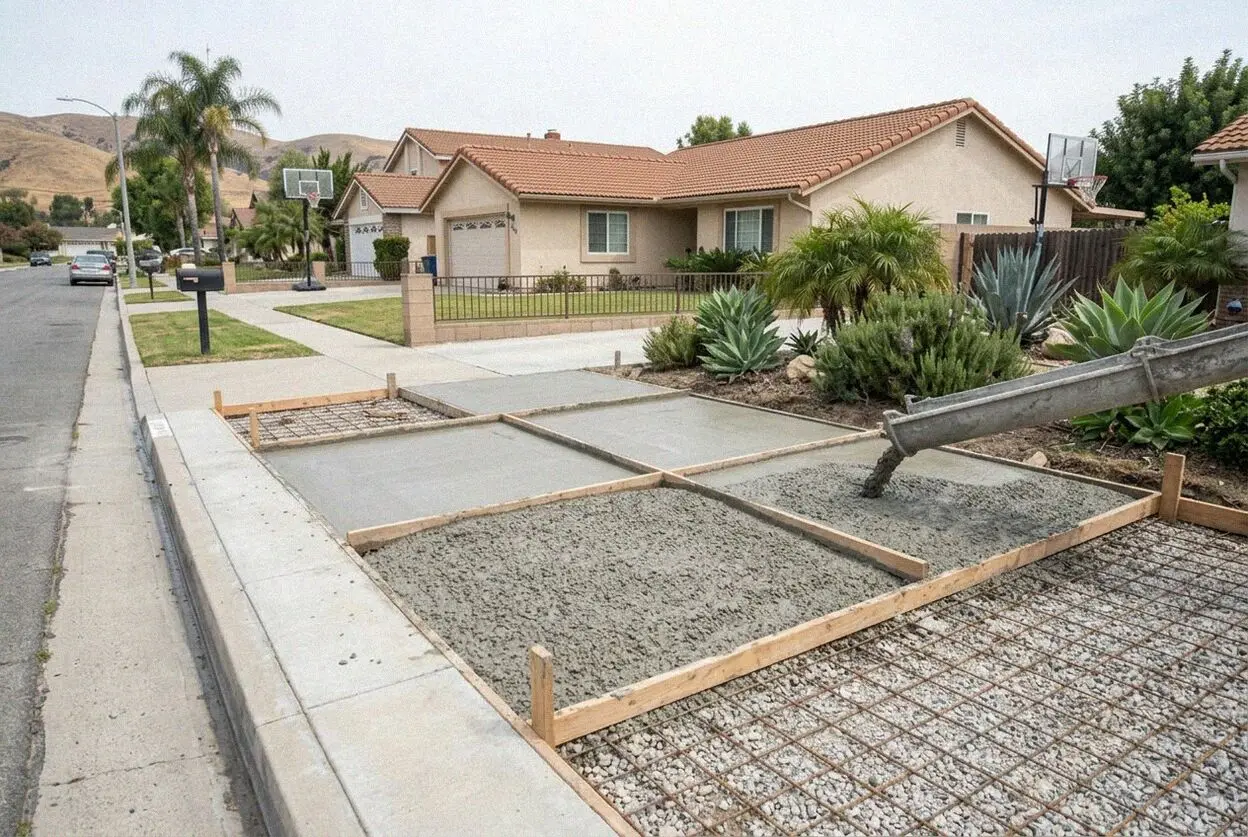
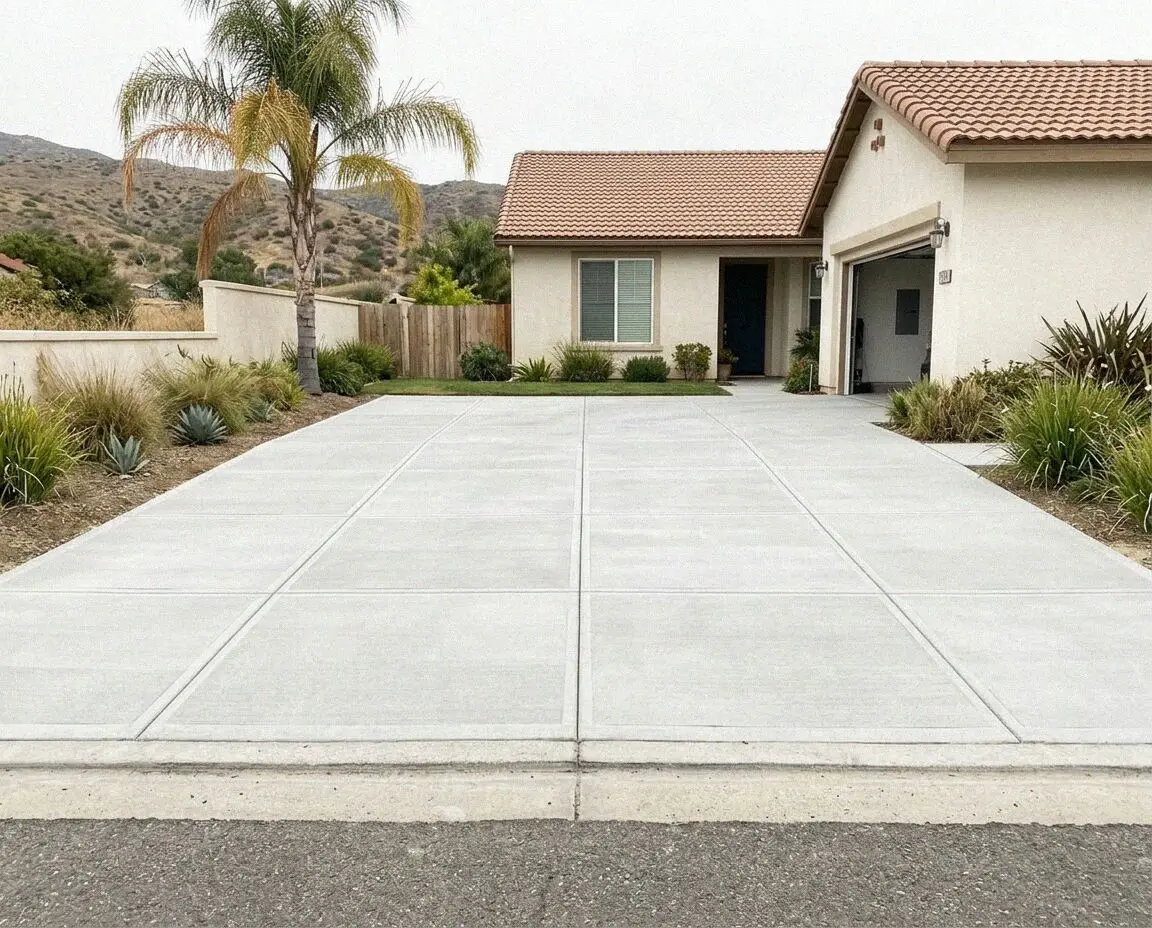
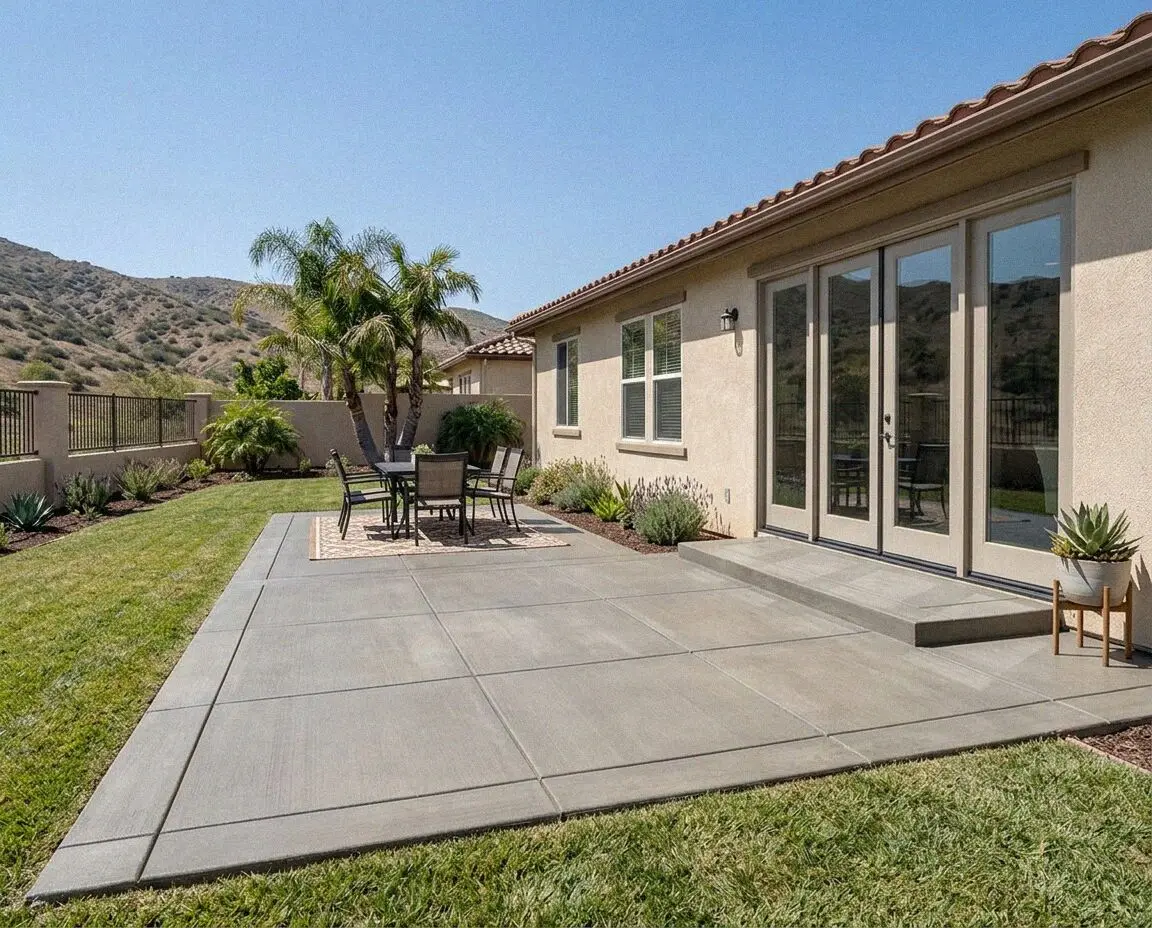
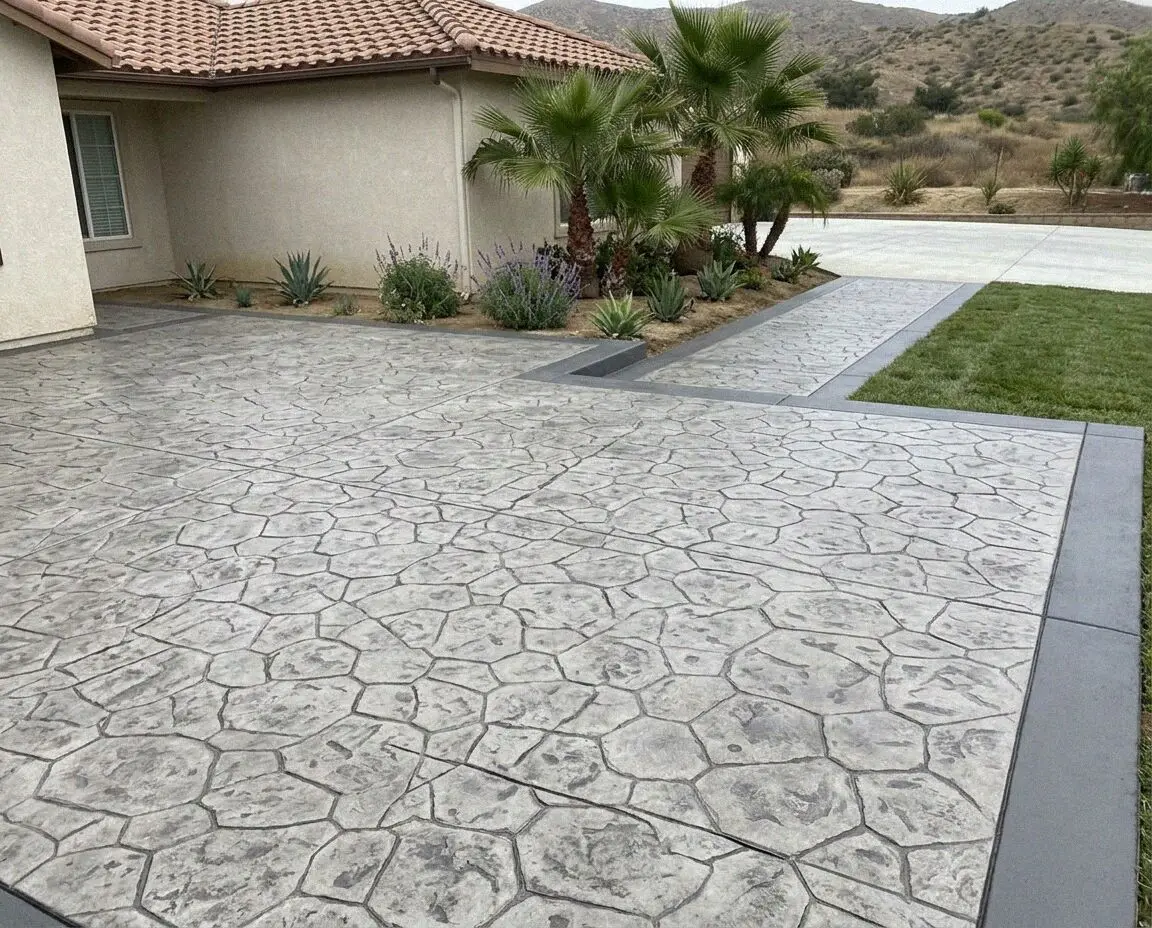
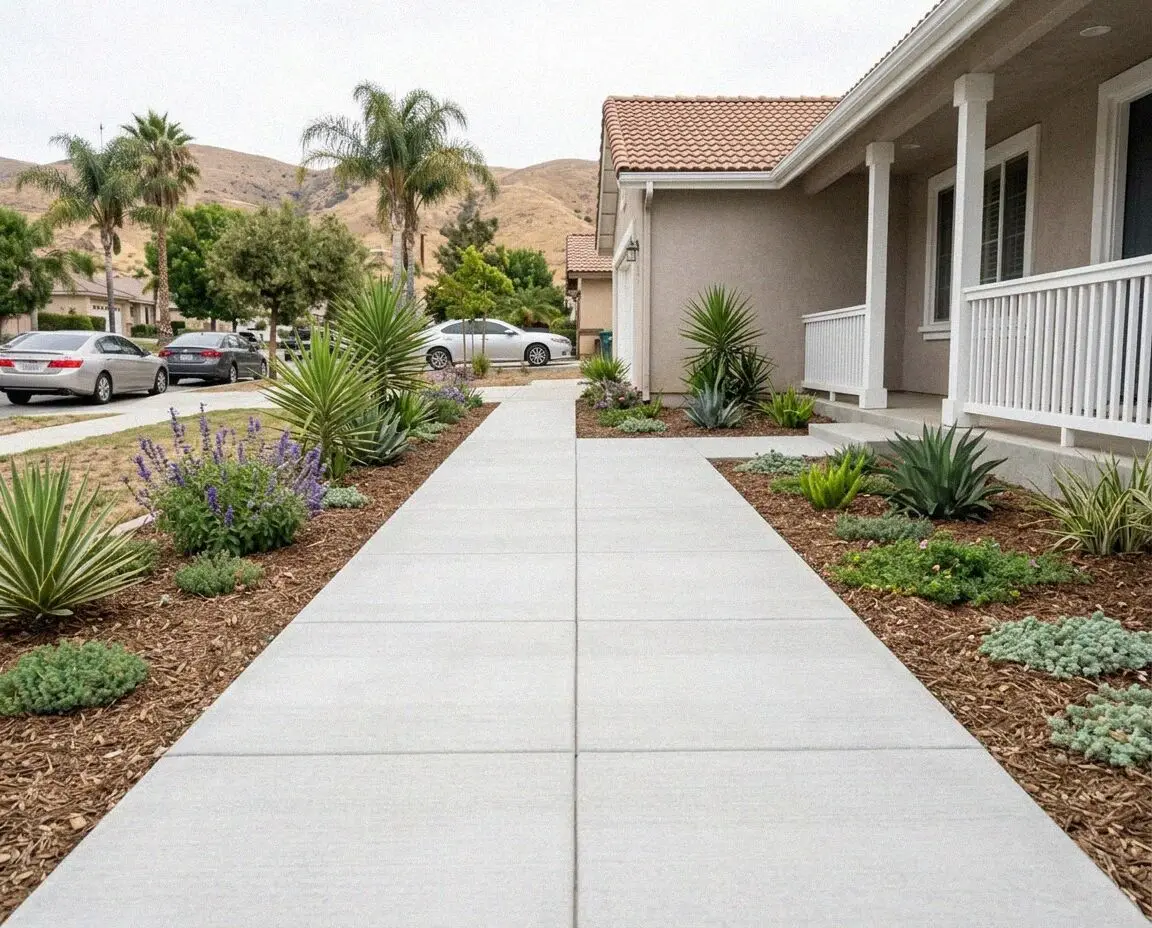
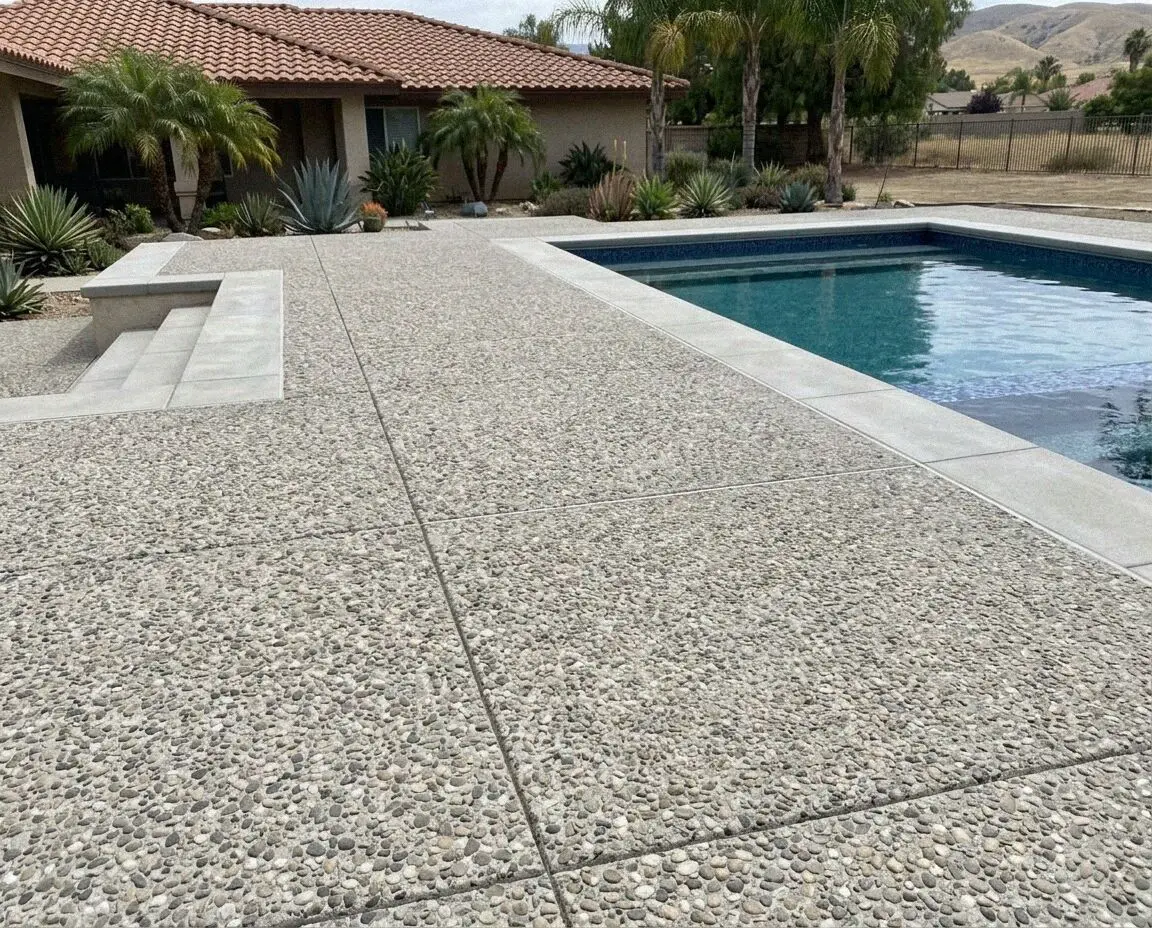
The name is Spanish for tar, and the oil under the Puente Hills is why the town exists. The pumps still run above the 57 north of Lambert Road, and the Blackstone and La Floresta tracts were built on land the oil companies handed back. That matters for a slab, because remediated oil field ground is engineered fill with a grading plan on file. Permits go to the City of Brea building division at the Civic Center on Civic Center Circle, and we pull them under our CSLB C-8 license.
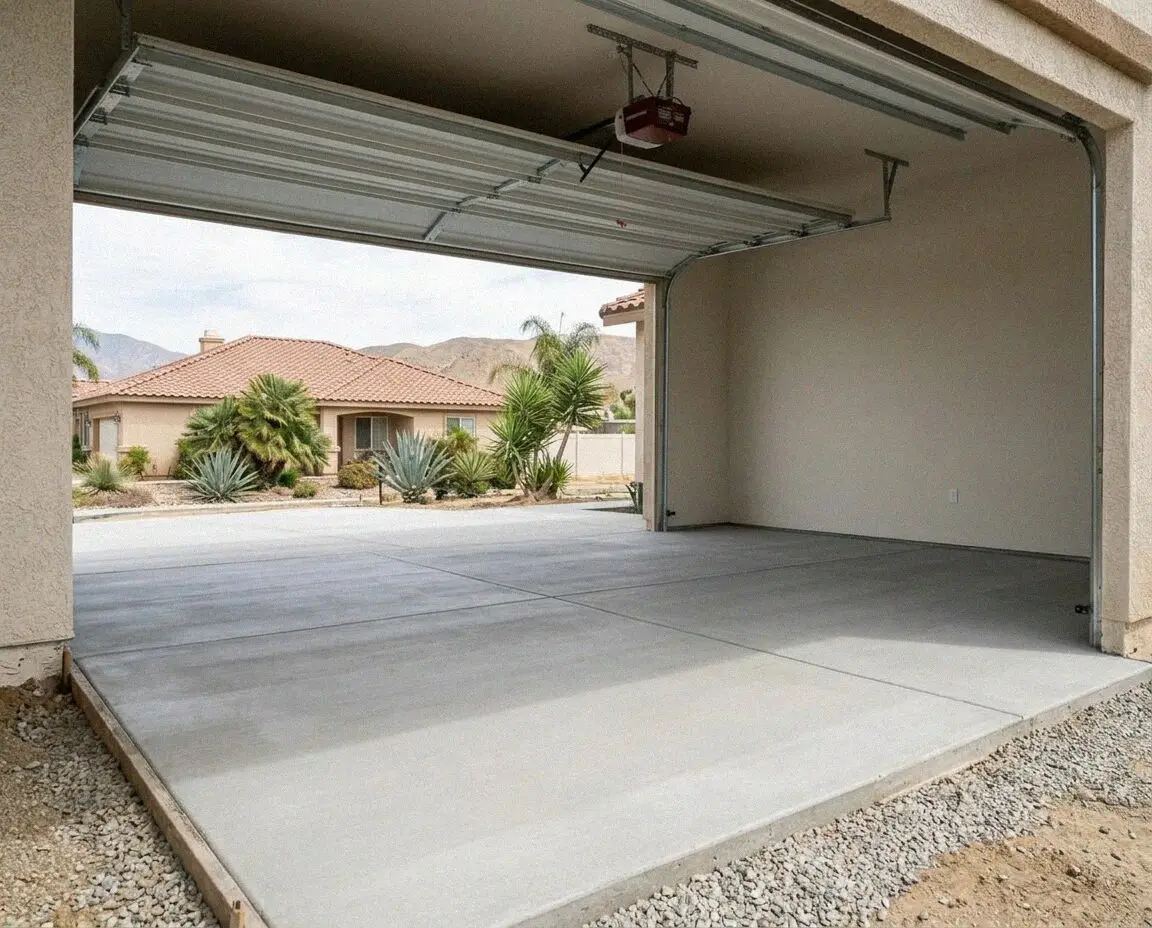
We come in on the 60 and the 57 from Ontario, 22 miles, and leave the freeway at Lambert Road or Imperial Highway depending on the job. We never bring a loaded truck through Carbon Canyon Road, because it is two lanes and winding, so a mixer for a Brea job is batched on the Orange County side and arrives inside its working window. The old blocks off Brea Boulevard and Birch Street have driveways poured for one car, and widening them is the job we are asked for most downtown.
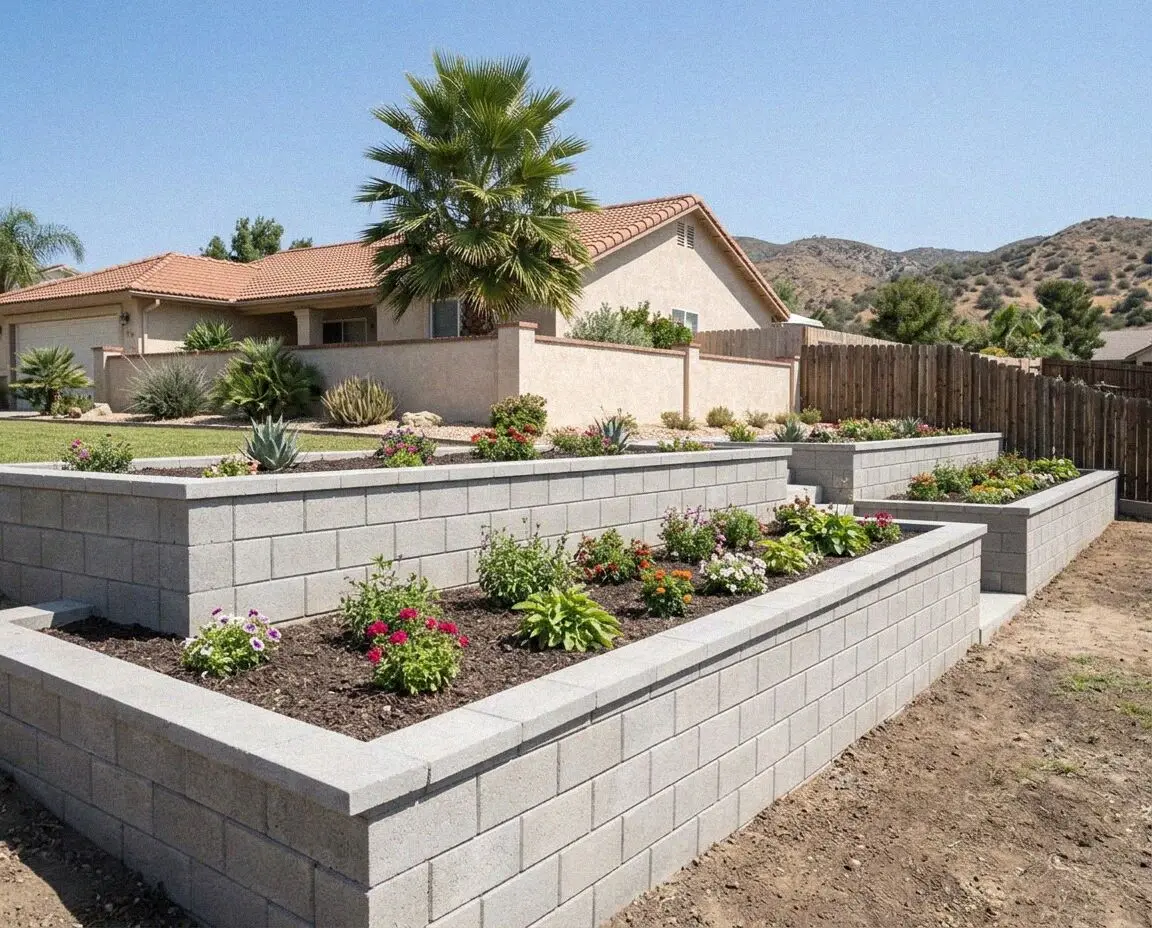
The weather is milder here than in our own valley. Brea sits far enough toward the coast that a July afternoon runs several degrees under Ontario, so we can pour into the middle of the day for more of the year than we can at home, and the winter rain that swells the creek clay drains off Brea Creek and out of Carbon Canyon fast. On the hillside streets we slope every slab so that water goes with the hill and never toward a footing that was cut into it.