Serving Ontario, CA and surrounding areas.(909) 404-9502
Ontario Concrete Pro

Concrete Parking Lot Building in Ontario, CA for Freight Yards That Cannot Close

Ontario Concrete Pro pours lots 6 to 8 inches thick with doweled joints, in phased weekend sections so trailers keep moving through the yard. Every estimate is measured and written on site.

Google reviewsFacebook reviewsBetter Business Bureau reviews5.0 Stars Rated by our customers · Google, Facebook and the BBB
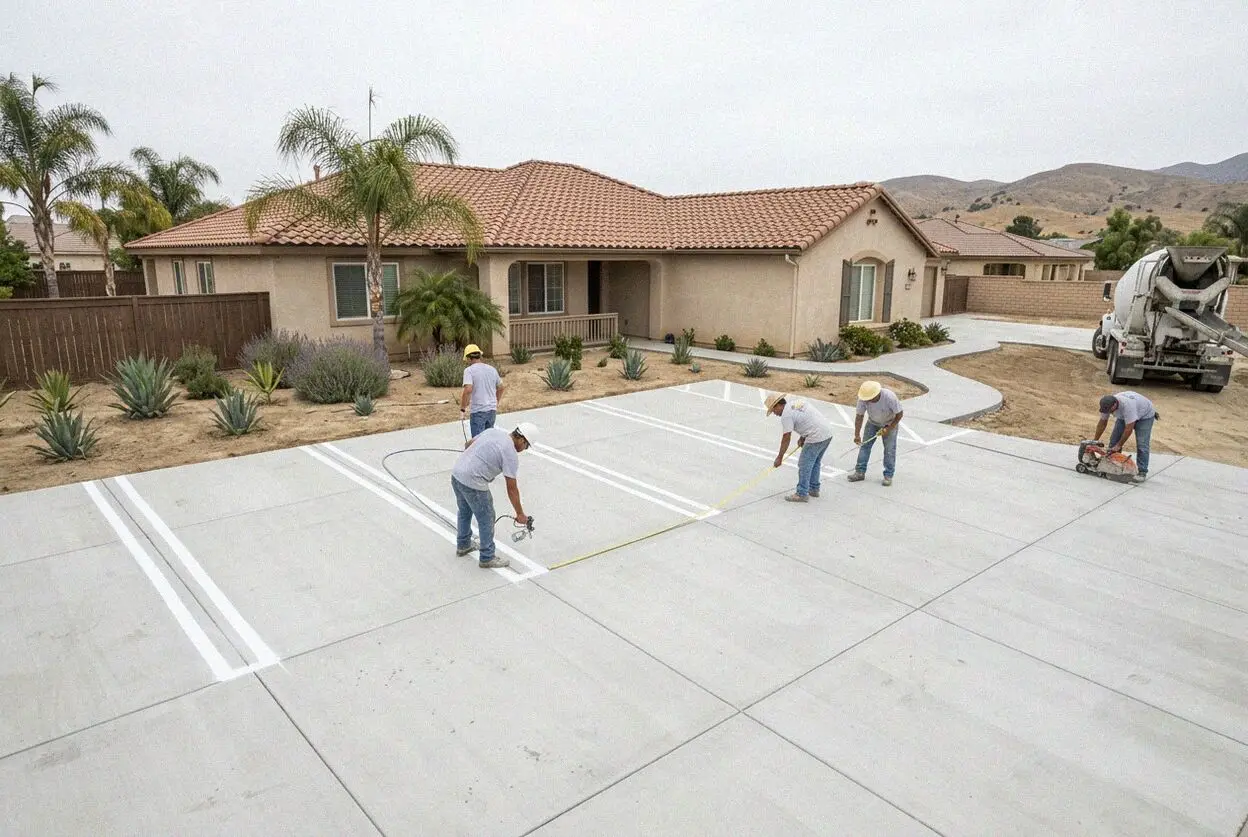
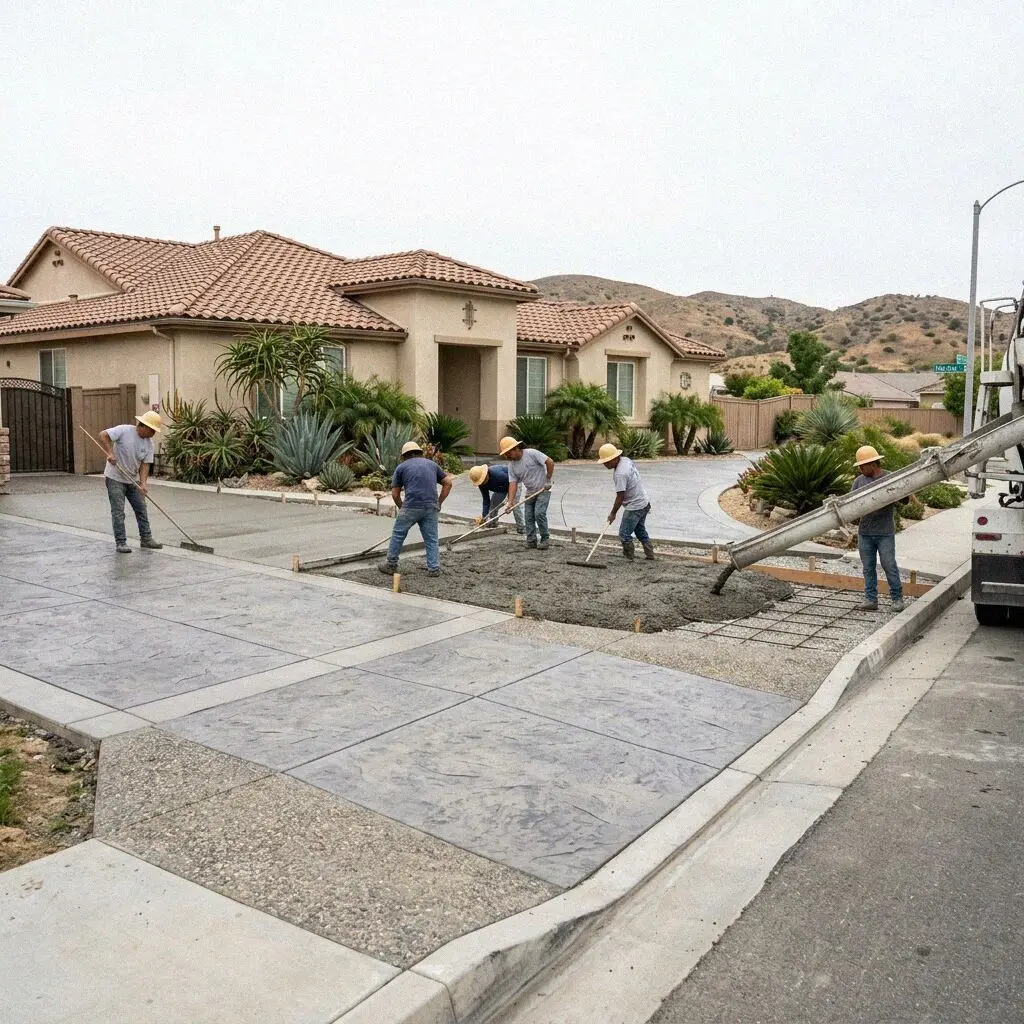
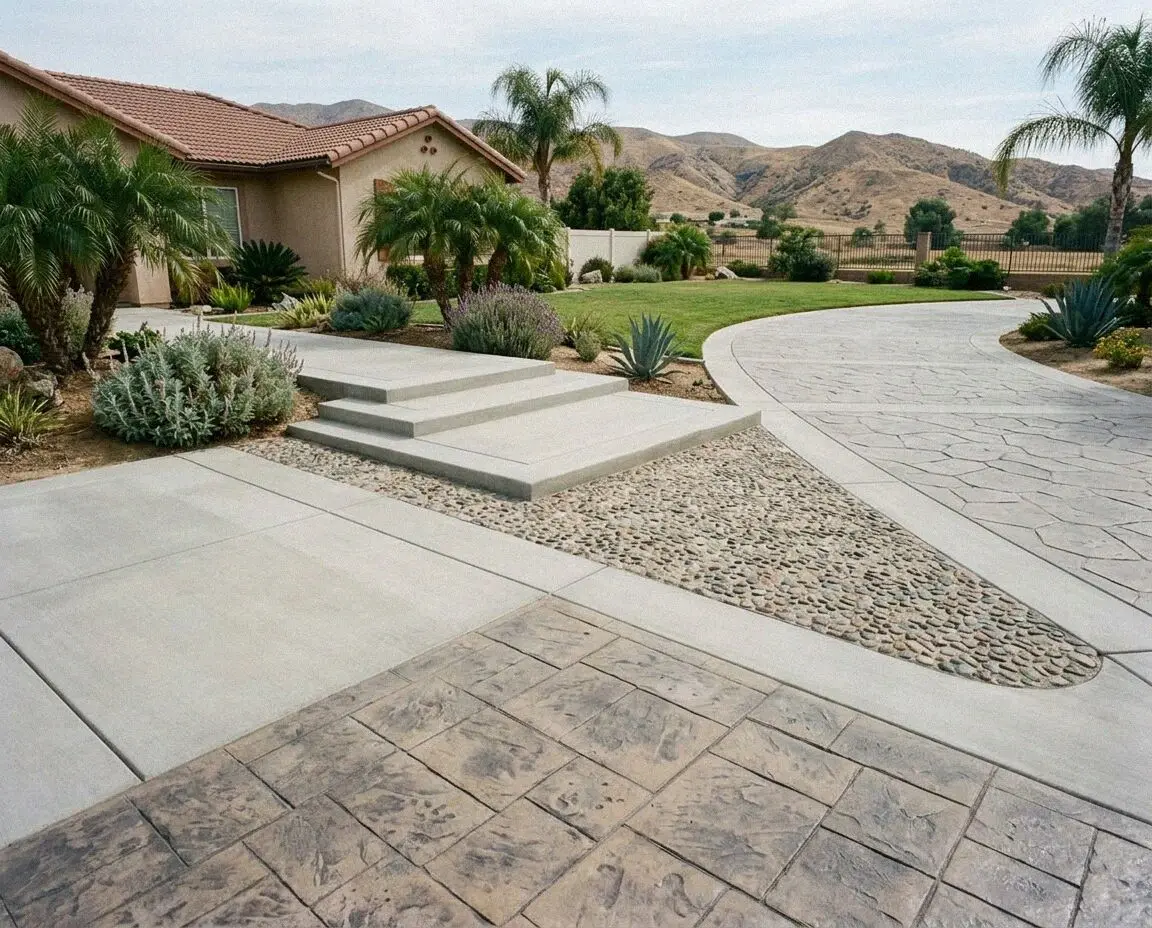
A truck apron being poured at a distribution yard in Ontario
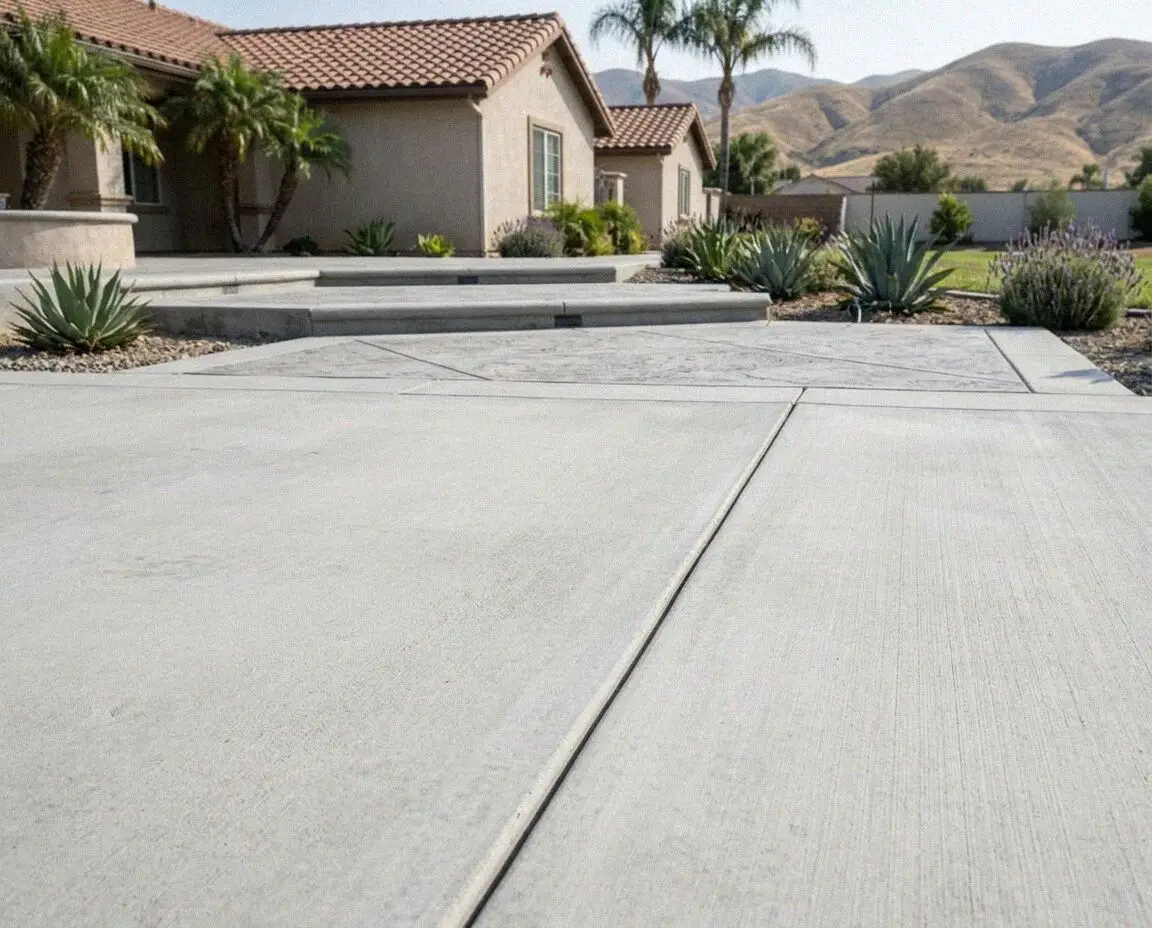
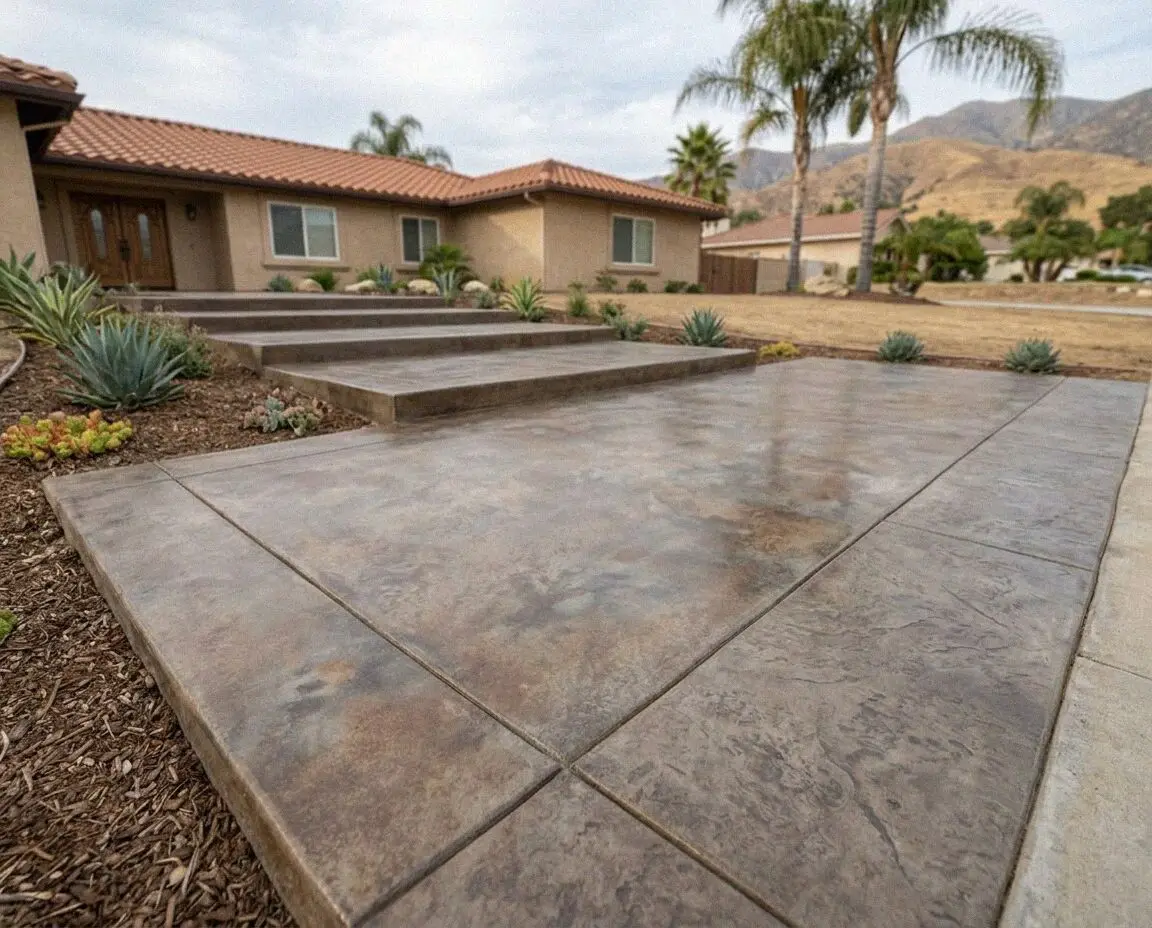
A finished concrete parking lot and dock approach in Ontario

Why Ontario yards call us

How We Pour a Parking Lot in Ontario

A parking lot fails in the 20 feet in front of the dock, not out in the stalls. A loaded trailer sets its landing gear down on two steel pads about the size of a dinner plate, and that point load travels straight through thin pavement into the subgrade. Build the approach 8 inches thick over ground that has been proved, and the same apron takes the same rigs for 30 years.

Ontario Concrete Pro was founded in 2020 by Victor Salgado, who spent 14 years on commercial slab crews around the Inland Empire before that, and he sets the pour sequence on every lot himself. Ontario carries more of this work than most cities its size, because the freight blocks either side of Jurupa Street and the ground ringing Ontario International Airport are yards first and buildings second.

Lots are built under a CSLB C-8 concrete license with liability insurance on every job, and thickness follows the Portland Cement Association guidance for the axle loads a site actually sees rather than a residential default. The work carries a written workmanship guarantee against defects in how it was built, handed over when the last phase is striped and opened.


Warning signs

When does an Ontario parking lot need rebuilding?

Cracks fanning off the dock

Cracks that spread in an arc out from a dock door are landing-gear loads finding pavement too thin to spread them. Every trailer drops the same two pads in roughly the same place, and once the slab has fractured under them the pieces rock and grind at each drop.

Ruts in the drive lane

A drive lane gone wavy under the tires is a base problem rather than a surface one. Container traffic tracks the same line into a yard all day, and where the ground beneath it was never proof-rolled the pavement follows the soft spot down an inch at a time.

Joints that have opened up

Open joints on a truck route mean the slabs either side are moving on their own. With no dowel across a construction joint each panel carries the whole wheel load alone, the edges spall where the steel should have been, and forklifts take the corners off both.

Water standing after rain

A puddle still sitting a day later says the lot no longer falls to its inlets. Most of the rain here lands between December and March, and a yard ponding in the stalls is also a yard pushing water down under the pavement exactly where the rigs turn.

What's included

Every Ontario Parking Lot We Pour Includes

These are standard on every lot, with nothing added as a line item later, and each one answers what actually loads a yard here: trailers dropping their legs, containers turning tight, and a summer that bakes a slab before it has set.

Subgrade proved first

The subgrade is dug, probed and proof-rolled before any base arrives, so a soft pocket is found with a loaded truck rather than with a crack.

Haul-off and crushing

Broken pavement leaves the site the day it comes up and goes for crushing, so your yard is never storing a spoil pile beside a live dock.

8 inches at the docks

Dock approaches and truck aprons are poured 8 inches thick over compacted base, because that strip is where the landing gear lands.

6 inches on the lanes

Drive lanes and turning areas go down at 6 inches, and the stalls where only staff cars sit are held at 5 rather than paid for twice.

Doweled joints

Smooth dowels are set across every construction joint a truck will cross, so both slabs carry the wheel instead of one edge taking all of it.

Reinforcement tied in

Bar is tied on chairs at mid-depth right through the truck route, lapped at the ends and kept clear of the lines the saw will cut.

ADA stalls and route

Accessible stalls, the aisle beside them and the path of travel to the office door are formed to slope, then checked with a level.

Drainage held to grade

The lot is shot to its inlets and every panel checked for fall before the crew leaves, so nothing ponds where trailers stand overnight.

Your options

Ontario Parking Lot Surfaces, Compared

Four ways to surface a yard here, judged on how long each lasts, what traffic it suits, what it asks of you afterward and how long the area is shut. What decides it is the weight that crosses, not the look.

OptionLifespanBest forUpkeepClosure
Concrete, 8 inch30 to 40 yearsDock approaches and truck apronsRout and reseal joints at 5 yearsOne weekend a phase, 7 to cure
Concrete, 6 inch25 to 35 yearsDrive lanes and container turnsReseal joints, sweep quarterly2 days a phase, 7 to cure
Concrete, 5 inch20 to 30 yearsEmployee and visitor stalls onlyReseal every 6 years, restripe1 to 2 days, then 7 to cure
Asphalt overlay8 to 12 yearsCar parking away from the docksSealcoat at 3 years, crack fill1 day, open the same evening

Concrete costs the most to lay and the least to keep under trailers; asphalt is the cheapest way to cover a car park no rig ever enters.

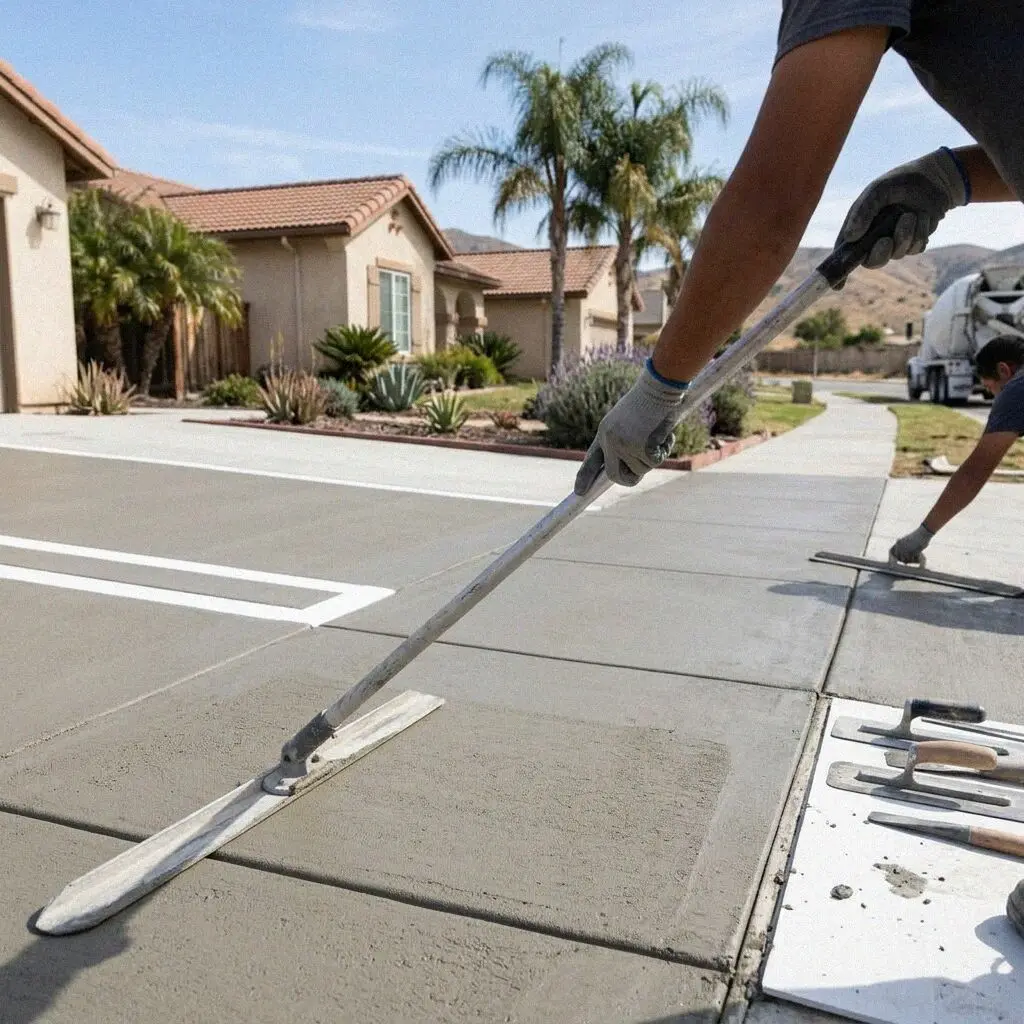
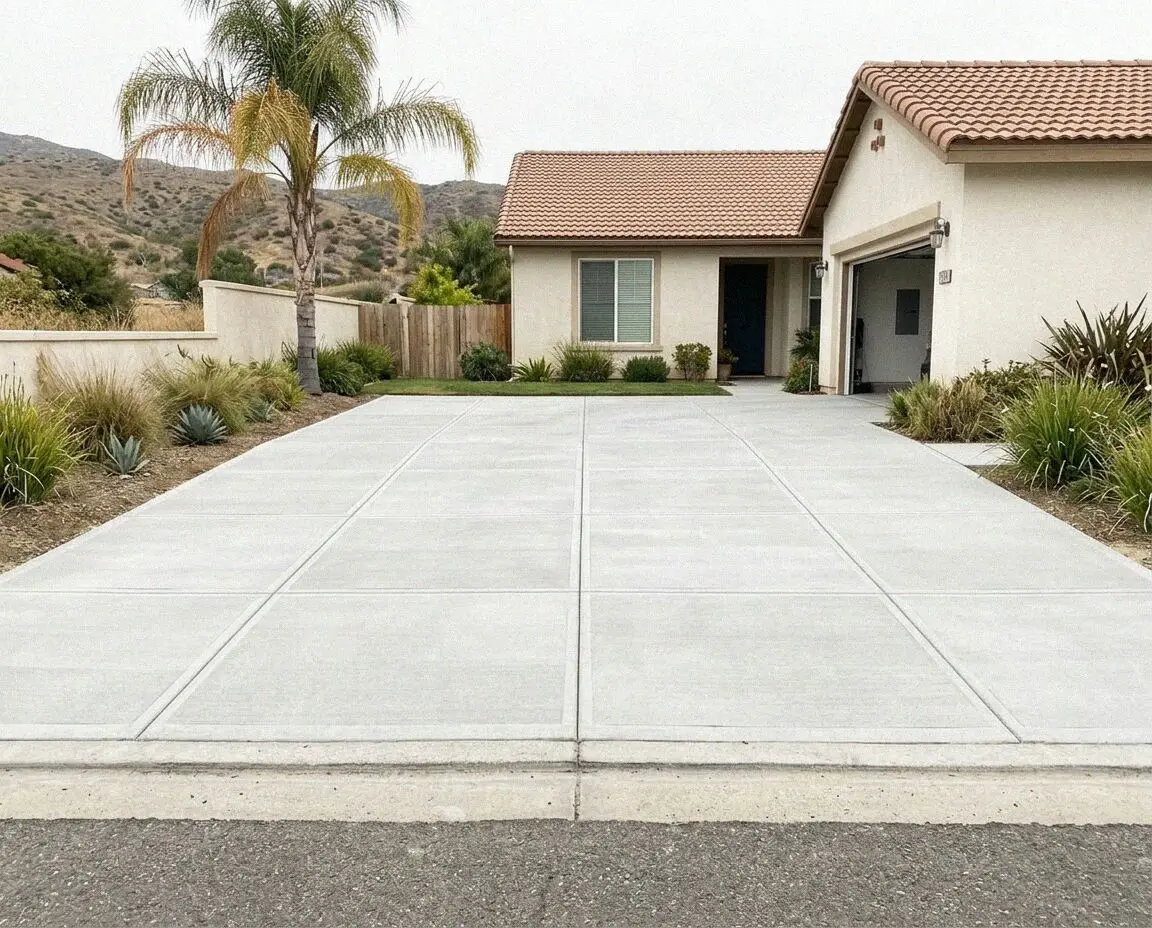
Concrete drive lane and dock approach at an Ontario freight yard

Local knowledge

What Makes an Ontario Parking Lot Different

Ontario is a freight town with an international airport sitting in the middle of it, so a lot here is a working surface rather than a car park, and it is asked to carry weight all night.

That changes the build before it changes the mix. A yard off Jurupa Street cannot go dark, so the paving is cut into phases small enough for trucks to route around the barricades, placed from Friday evening and given the weekend plus the rest of its seven days before a loaded trailer crosses. Where one phase meets the slab beside it the joint is doweled rather than butted, because that seam is under wheels again by Monday.

Summer sets the other half of the schedule. Once afternoons sit above 95 degrees a slab gives up its water before it has set, so placement starts ahead of first light and the surface is kept damp through the week it cures. We work the yards along Jurupa Street, the frontage around the airport and out at Guasti, and the older loading docks on the numbered streets north of Holt Boulevard.

Our process

How an Ontario Parking Lot Job Runs, Phase by Phase

A lot is planned around your operation rather than around ours. One crew, one written figure, the permit filed by us, and a phase map agreed with your yard manager before the first barricade goes out.

1

Free on-site measurement

Victor Salgado walks the yard with whoever runs it, counts dock doors and turning space, and cores the pavement that is already down.

2

Phase map and permit

You settle which sections shut and in what order, and we file the building permit and the drainage review that travels with it.

3

Demolition and subgrade

The phase is broken out and hauled for crushing, then the subgrade is proof-rolled and any soft ground dug out and replaced.

4

Base, steel and the pour

Base is compacted, bar tied on chairs, dowels set at the joints, then the pour and a broom finish across the line of travel.

5

Cure, stripe and hand back

Joints are cut within 12 hours, the slab cures for 7 days, and the phase is then striped and handed back with the guarantee.

What moves the estimate

What Decides an Ontario Parking Lot Estimate?

Area moves the figure first, and then how much of that area carries trucks. A yard that is all employee stalls is a different build from one with six dock doors, and working around a live shift pattern is a line of its own.

Truck area against car area

Every foot on a truck route is 6 to 8 inches deep with dowels and bar in it; a staff stall is not. That split decides most of it.

Dock doors and aprons

An apron is the deepest concrete on the site and the fussiest to form, so the number of dock doors moves the figure quickly.

How the yard stays open

Six small phases take longer than one open weekend of work. What they buy back is the shift you would otherwise have stood down.

What is under it now

Old asphalt hauls away cheaply. Farm ground on the south side does not, because the organic layer has to come out and be replaced.

Nothing here is priced off an aerial photograph. The visit costs nothing, the figure is written on the yard, and we ring back within 1 business day. (909) 404-9502 or send us a message.

Ready to rebuild your Ontario yard?

Call or use the form and you will hear back within 1 business day to set a walk of the site with the owner. Measuring it and writing the figure costs nothing, and you are free to take that figure anywhere.

Request a Free Estimate

Written on site · No obligation

By submitting, you agree to our disclosure and consent terms, including being contacted by Ontario Concrete Pro.

Reviews

What Ontario Yard Managers Say About Their Lots

Left on Google and Facebook by the people who signed the phase maps and had to keep the freight moving while we worked. All three are commercial yards rather than driveways.

Google review

“We run 40 outbound loads a night and could not shut the dock for a week. They took it in four phases over four weekends, poured the aprons at 8 inches and doweled every joint back into the old slab. We never turned a trailer away.”

D. Marchetti, GuastiConcrete Parking Lot Building · Google · 2026
Google review

“Ours was asphalt laid over old dairy ground and it had gone to waves under the container traffic. They dug the dark soil out, proved what was left with a loaded truck and poured 6 inches. Two winters on, the lane is still flat.”

S. Okonkwo, Ontario RanchConcrete Parking Lot Building · Google · 2026
Facebook review

“The plan check wanted the accessible stalls and the route to the office door done with the rest of it. He filed the permit, met the inspector on site and we passed first time. A corner spalled in the second month and they came back and made it good.”

T. Vasquez, Holt BlvdConcrete Parking Lot Building · Facebook · 2026

FAQ

Questions About Ontario Parking Lot Concrete

What facilities and operations managers here want settled before a phase map gets signed, answered with the numbers the lot is actually built to.

(909) 404-9502
  • How much does a concrete parking lot cost in Ontario?

    Area sets the figure first, then how much of that area carries trucks. Eight inches with dowels at the dock approaches is a different build from five inches under staff stalls, and phasing around a live shift adds crew days rather than concrete. The measurement is taken on your yard and the figure written before we leave it.

  • How thick should a parking lot slab be in Ontario?

    Six inches through the drive lanes and the turning areas, eight at the dock approaches and truck aprons, five where only staff cars sit. The step up at the docks is there for landing-gear loads, which arrive as two point loads rather than as rolling weight spread over four tires. The number comes from your own traffic count.

  • Can you repave the lot without shutting the yard down?

    Yes, and that is how most Ontario yards are built. The lot is divided into phases small enough for trucks to route around, and each phase goes down from a Friday evening so the weekend runs into the cure. It still wants seven days before a loaded trailer crosses it, which is why the phase map is agreed with your yard manager first.

  • Do I need a permit for a parking lot in Ontario?

    Yes. A new or reconstructed lot goes to the City of Ontario Building Department as a building permit, and the drainage and the accessible parking are reviewed alongside it. Allow about three weeks for that. We file it and meet the inspector, so the counter is never your problem.

  • Can you pour concrete over the asphalt that is there?

    Not on anything a truck crosses. Asphalt keeps deforming under load, and a slab sitting on it cracks along every seam and patch beneath within a season or two. The old surface comes out and goes for crushing, the ground under it is proof-rolled with a loaded truck, and the concrete then bears on something that has been proved.

  • What guarantee comes with a new concrete parking lot?

    You get a written workmanship guarantee against defects in how it was built, handed over at the final walk. It covers the subgrade, the doweled joints, the thickness at each area and the fall to the inlets. It does not cover a phase loaded before its seven days are up, or damage from plant heavier than the traffic the lot was built for.

  • Which concrete mix do you use on a commercial lot?

    A 4,000 psi ready-mix from a batch plant in the valley, placed on compacted Class 2 base with bar tied at mid-depth and smooth dowels across the construction joints. It is broom finished across the line of travel, the joints are cut within 12 hours, and they are routed and sealed once the slab has finished shrinking.

  • What is under the lots on the south side of town?

    Old farm ground. Everything south of Riverside Drive was row crops and dairy pasture within living memory, and the organic layer that farming left carries no load and keeps compressing under one. It is stripped and replaced with compacted material, and how deep that runs is proved in the open cut rather than read off the USDA Web Soil Survey.

Service area

Parking Lot Work Across Ontario and the Valley

The towns our crews pave yards in, nearest first, out from the freight blocks in Ontario across 4 counties. Each name below opens that town's own page.

Show All Areas We Serve

Start Your Ontario Parking Lot

Tell us which weekend is your quiet one and the phase map gets built around it. The site walk and the written figure cost nothing, and the call back comes within 1 business day.